Showing posts with label teaching. Show all posts

Friday, October 9, 2015

Snatching Time to Write

After a month away, time to reck my own reed and resume writing, at least as frequently as I ask my students to. As I notice longer journal entries and fuller use of writing time, I can now find moments during class to squeeze in my own writing. I have managed to scrawl a few 5-minute responses to our posted prompts, and I transcribe some of these "express" thoughts here:


  • If you could travel back in time, what period would you visit, and what would you do?
What would I not give to teach alongside my renegade grandmother in 1900s British-occupied Ireland! As Grandma O'Meara recounted to me decades ago, she and her colleagues defied the British government by teaching children the Irish language and Catholicism. Teachers deftly concealed their counter-curriculum from officials during school inspections, and then carried on their revolution in guerrilla fashion.

  • Write from the perspective of a different person, an animal, or an inanimate object:
As a centuries-old oak or redwood tree, I have seen (possibly, and however distantly) cities encroach, societies grow, cultures evolve, various living populations grow and decline, and the climate change. Hundreds, maybe thousands, of hands, feet, and tails have patted, clutched or brushed me, and countless couples have tattooed their emblems of love into my skin. As one generation after another of humans withers into maturity, age brings me heft and strength. (Yes, however awkward it is to point out, it is true: even as my chest swells, as my arms reach and ramify, time, my friend, takes its inevitable hatchet to you.)

Saturday, August 29, 2015

Friend and Foil

I can think of few (good) books that lack character foils. I am thinking now of friend­-foils, not foe-foils: Huck and Jim, Ralph and Piggy, Macbeth and Lady Macbeth, Watson and Holmes. The best children’s literature features odd couples, too: where would Charlotte’s Web, Winnie the Pooh, and The Wizard of Oz be without the mismatched-pals dynamic?

As my summer of stellar young adult literature winds to a close, I have dog-eared many passages of highly-burnished writing, grabbing my otherwise-discarded teacher hat to note specific techniques I want students to emulate. The friend-foils component spans all of the books on my list: Matt de la Peña’s I Will Save You and Mexican Whiteboy, Terry Spencer Hesser’s Kissing Doorknobs, and Laurie Halse Anderson’s Speak.

Uniquely, I Will Save You’s foil is a shadow, that archetypal embodiment of a protagonist’s darker inclinations—more frenemy than friend.  But like any good friend-foil, Devon contributes an essential ingredient to his buddy Kidd’s development, in this case a destructive world-view that Kidd must learn to reject. In Speak, Melinda's bubbly foil ditches her to preserve her social status, but Melinda's two eccentric teachers arguably fulfill the role of her foils, too. Their baffling, often-outlandish expressivity speaks to the heart-heavy, tongue-tied hero. 

The rest of the gang—Mexican Whiteboy’s Uno and Kissing Doorknobs’ Donna—exert  more straightforwardly-constructive influences on their counterparts (however wholesomely or unwholesomely-delivered).  Each supplies his or her friend with a vital piece of themselves—the quality of perseverance, an optimistic attitude, a thick skin, introspection, extroversion. However tenaciously the protagonist questions or rejects her friend’s offering, however long it grates, bemuses, or embarrasses her, the hero ultimately acknowledges her deficiency and allows the friend-foil to help make her whole.
If stories are, as Jonathan Gottschall writes in The Storytelling Animal, thrillingly crucial life-simulations, the friend-foil element mirrors our abiding need for difference in our relationships, however challenging or counterintuitive it feels. As Susan Cain argues in Quiet, our increasingly-extroverted world needs the caution, self-reflection, and deeply sustained thought of its introverts. In Jefferson County, Kentucky, public school-children mingle across socioeconomic and racial lines because their parents, first-generation products of busing, want the same social education for their children.  They recognize that each child brings a different dimension of the world to their community, making one another whole with each new piece of human experience.

It is hard to understand the paradox that couples our intellectual, emotional, and spiritual need for diversity with our tribal instinct, the source of much human division. The characters in these young adult novels, at least, come out on the moral-growth side of this struggle—taking a chance on challenging attitudes and traits despite their discomfort and fear. However gritty the journey, this is an outcome I can endorse, whether in YA life-simulation or in real life.

Thursday, August 13, 2015

The End-of-Summer Shadow

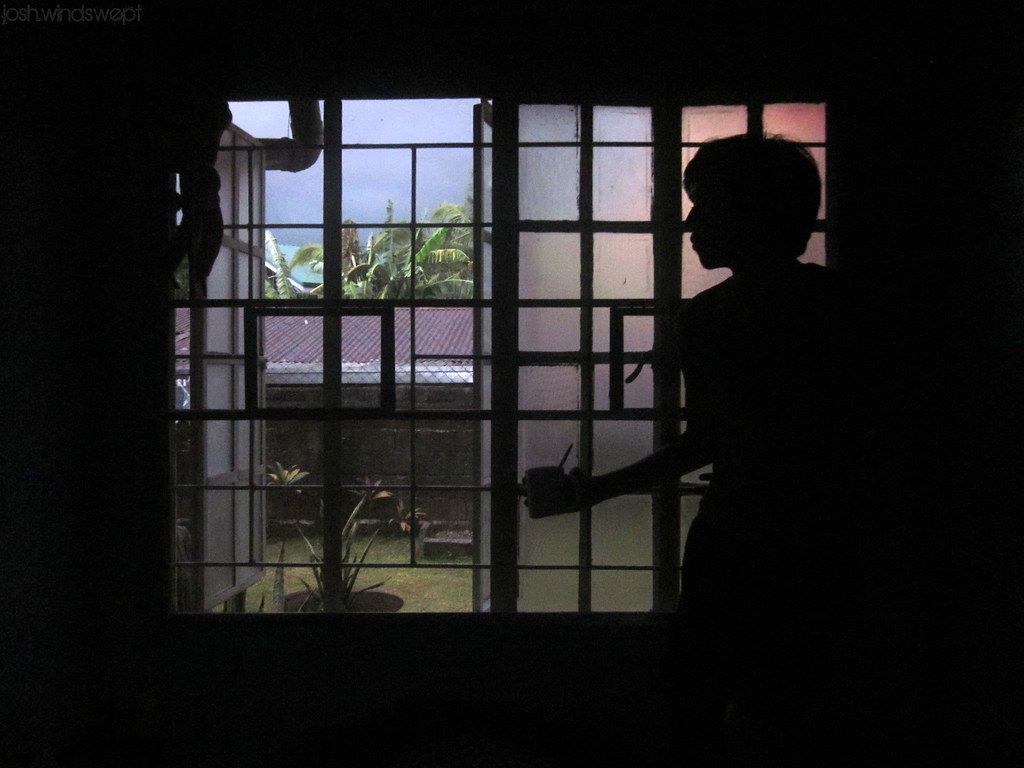
Josh James/Flickr: Shadows

Teacher-educator Kelly Gallagher describes late Sunday afternoon as “the 4:00 shadow,” the time when every teacher feels that twinge of urgency to wind up her preparations for the week (Deeper Reading, 2004).  It is a positive feeling, with dysphoric undercurrents—as adrenaline fires up creativity and anticipation of classroom interactions, it also unsettles subtle anxieties from their weekend rest: how will I get this student on board this week? Will this new vocabulary activity work as planned?

Three weeks before my students return to class, I am experiencing a sort of “end-of-summer shadow,” my anticipation and apprehension mingling and kicking me into gear. Two months mulling over new approaches and texts, imagining my students, our classroom, and our conversations, have led here: final syllabi and text selections, and wondering if I am biting off more than I can chew.  I have restructured my lessons based on a dialogical learning philosophy, and I have identified reading and writing apps for our new tablets.  Almost everything is new.

Too much change? How will students receive it? I pursued these adjustments with the conviction that students should more actively participate in inquiry, with tools that are relevant to their everyday experiences.  

But uncertainty and excitement inevitably mix. The best remedy is to step over that shadow into the thrumming fluorescent light of the classroom.

Thursday, July 30, 2015

The Second-Grade Muse

I wondered how much time I might have to think about teaching during my family reunion in Iowa last week. And while I could have embraced a total vacation from these thoughts, my seven-year-old nephews stepped in to sustain them: the two are fascinatingly avid readers, wonderful models for anyone who would cultivate independent reading habits in a class of teenagers.

Years of reading with their parents at nearly every juncture of the day (breakfast, pre-nap, lunch time, etc.) have whetted their literary interests. During our travels last week, it was not uncommon to see one curled up with anything from Percy Jackson to Super Diaper Baby. For hours on the road, they listened raptly to detailed audio dramatizations of Greek myths, recounting characters and events with specificity that often exceeded their parents' and my recollection.

The source of their total affinity? Immersion. Years marinating in words, stories, characters, suspense. How can I replicate this in my classroom, balance this imperative with other objectives while trying to compensate for the years some students have spent indifferent to books?

Fortunately, kids are inquisitive and drawn to narratives at every age, even when they need a little help finding great stories. I am reading about using literature circles to introduce choice into classroom reading, and I am still considering different methods of launching students' independent reading. I will follow up with thoughts on this soon, before the start of the new school year.

Wednesday, July 15, 2015

Cross-Compositional

I spent my first five undergraduate semesters studying music.  Though the program was performance-track, I had many opportunities to write, and almost always about music. I wrote about the competing "dictates of structure and expressivity" for a paper on George Rochberg's third string quartet (which, in my youthful assessment, "retains the serialist aesthetic of condensed motivic content and recontextualizes it in the more accommodating space of stylistic eclecticism..." a claim that is somewhat difficult to read now with a straight face). I researched American immigrant music; I investigated twentieth-century composers' fascination with clowning and puppetry. I also reported on the musicological experience of browsing a local used record shop. These were rich and varied writing experiences, and I had forgotten until recently the pleasures of describing music's structure and aesthetics, of considering the social and emotional impacts of the choices composers make.

My students also enjoy writing about music. It is among the top subjects they choose for their independent writing entries. They praise music's uncanny versatility as an emotional amplifier or buffer, and students' favorite songs and artists become proxies for their most passionate feelings and opinions. "I cannot live without my music," their journals chorus.

It is a cognitive feat to translate complex emotional reactions and aesthetic judgements into words. I will more deliberately encourage this topic of writing with my students next year-- and produce some new music writing of my own this week. Already in the running: Janelle Monae, Paul Hindemith, Lupe Fiasco, and Sergei Rachmaninoff.

Tuesday, July 14, 2015

Sipping from the Digital "Deluge"

Here’s another plug for an NCTE book.

As I re-evaluate my students’ writing experiences, I must bring into focus an assignment that I invariably invest with so much ambition and excitement—and from which many students invariably reap so much frustration: the research paper.  I know a galvanizing research experience is possible: I have read about transformative project-based learning assignments, about students spurred to action by inquiry into their own communities.  But the vision inevitably gets lost in the execution, and I find myself as exhausted as those students whose voice and passion are diminished by the form’s considerable technical demands.

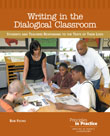
Enter Connected Reading (Turner and Hicks, 2015), another NCTE “Principles in Practice” book, which, in conjunction with Writing in the Dialogical Classroom (the topic of my last post), charts promising routes to successful research-based writing. Whereas Writing in the Dialogical Classroom maps an approach to habitual, reflective, and interactive writing, Connected Reading describes tools and practices that support the research process, just one part of a comprehensive methodology for teaching digital texts.


Among the authors’ objectives is to tame the online information crush. Their attempt to channel its “fire hydrant…deluge into something more akin to a drinking fountain” succeeds in these areas (124):
  • Reflecting on digital reading purposes and practices
  • Using technology to make social connections around reading
  • Using technology to research, annotate, and organize sources


Some highlights –

Reflecting on digital reading purposes and practices
The authors recommend students evaluate their reading purposes and practices. Many follow patterns of reading, passive and/or active, that they may not think about.

The book breaks down the digital reading process into three stages (paraphrased from p. 51):
  • Encounter the text in one of these ways: receive, stumble, surf, or search
  • Engage with the text: read, cull and toss, classify, annotate, revise, share
  • Evaluate the text: determine its value – assess interest level and purpose, find strengths and weaknesses, employ digital reading and sharing tools, prioritize reading over other claims on attention


Digital texts are likewise classified:
  • Linear – traditional print text (e.g., downloaded book) in digital form
  • Non-linear text with hyperlinks - webpage with links
  • Text with integrated media - webpage with visual, audio, and/or interactive media
  • Text with response options – webpage that invites visitor participation in forums or communication with the author


Using technology to make social connections around reading
“Training wheels” for writing and sharing reading insights (before posting reviews to Goodreads, Shelfari, etc):
  • Youth Voices – book review writing templates,
  • Youth Voices “Booktalk” channel – videos of student reviews


Reading discussion in class:
  • Literary circle wikis
  • Read Actively – web-based e-reader (public domain) with teacher-authored reading questions, teacher links to related content, reading discussion threads, and student commentary
  • Subtext – e-reader app with small-group reading discussion thread
  • Diigo, Ponder, Curriculet – other e-reader programs
  • Storify – to “synthesize reading” (122)

Online sharing:
  • Book reviews – Goodreads, Shelfari, BookTube, Quotev, Reddit
  • Sharing/interpreting books with alternative media – Toondo comics, Digital Films animation, Scratch or Gamester Mechanic video game, Glogster, “augmented reality” book trailer


Using technology for research, annotation, and organization
I was excited to read about these tools for digitally marking up texts, compiling and organizing research sources, and increasing students’ digital literacy:

Digital Literacy Practices
  • Give students a digital reading practices self-evaluation (see text p. 101)
  • Explain the “filter bubble”; introduce search engines like DuckDuckGo and Blekko that do not compile user data
  • Distinguish institutional websites from blogs: demonstrate using Technorati and Google Blog search engines


Research Tools (apps and/or web-based)
  • Citelighter – imports excerpts and bibliographic information from online sources; student comments on citation and exports everything to his or her document
  • Diigo and Evernote – to save and annotate online text
  • Flipboard, Pocket, Feedly, Clearly, Google Alerts – accumulate, compile, and/or store content on designated topics


Digital annotation (apps and/or web-based)
  • Google Docs or World Online/OneDrive – collaborative annotation of online excerpt/screenshot of print excerpt
  • Skitch – photographing, briefly annotating print text
  • Awesome screen shot – photographing text
  • Screencast-o-Matic –verbal annotations of photographed text

As promised, the authors maintain a steady, manageable stream of information about digital reading, including its application to the research process. I look forward to incorporating many of these resources and suggestions into my teaching this fall.

Monday, July 6, 2015

Taking Stock, and Investigating Dialogical Writing


The end of the year always invites introspection. What troubles me now is that five years in, I still experience this process as an inventory of missed opportunities. At this time the full picture of my students' learning appears, in high, candid resolution. Why hadn't I noticed the chasm between students' understanding and my own assessment of it? The blemish of an unaddressed mistake or an unresolved oversight? The ugly scratches of students handicapped by prescriptive writing assignments, rubric-dependent rather than confidently autonomous?

Assessing this year's final picture has led me to some conclusions:

1. More frequent and descriptive formative assessments are in order next year.
2. Students must regard every writing assignment not only as worthwhile, but essential.

I have momentarily set aside the first resolution to focus on writing. Bob Fecho's book, Writing in the Dialogical Classroom (2011), is a robust manual written under the National Council of Teachers of English's (NCTE) Principles in Practice imprint.


Comparing the rich writing experiences of my own adolescence to the limited array I provided my students this year was painful--goadingly. Rather fortuitously, NCTE's advertisement for Fecho's book landed in my mailbox about a week into my angst, outlining a philosophy and framework for engaging students in authentic writing, in which their personal experiences and questions are in constant dialogue with other students' perspectives, with events in their own milieu and beyond, and with classroom texts.

The book has delivered on its publisher's promise. Among its principal insights:

1. Writing--frequent and intentional--should be rooted in students' lived experiences, in "the riches, embarrassments, victories, tragedies, conundrums, concerns, delights, and yes, even the routines of our lives" (28).

2. Writing is an inner dialogue. It helps us connect past experiences and written thoughts to present ideas, and we use these formulate future outcomes. It is a process of rereading and reviewing, while at the same time planning ahead, determining the ultimate meaning of present ideas. 

Fecho references Bahktin (1981): "All meaning comes through response [to reading and dialogue] and that response remains suspended between the past and the future" (18).

3. Writing is a dialogue with others. It is a non-linear process of reading/listening, evaluating, reacting to others' ideas, building on them, and reflecting on new ideas that emerge in the process.

4. An effective writing teacher recognizes these principles (paraphrased from p. 34):

  • Learning is a never-ending collaborative and constructive process
  • An effective learning community cultivates trust and camaraderie among its members
  • Learners are motivated by a sense of shared purpose
  • Fun and rigor are not mutually exclusive, but equally essential.
  • Caring teachers do not shy away from the tensions of dialogue in diverse classrooms. Rather than keep these differences at bay, they establish expectations and relationships that make sharing these differences a more inviting prospect.

The book's thoughtful commentary on authentic writing practice (from Fecho and several other teachers) is helping me compose a more encouraging picture of next year's students: ones who have taken charge of their own learning and writing development out of a deep feeling of necessity.

"Wisdom begins in wonder"


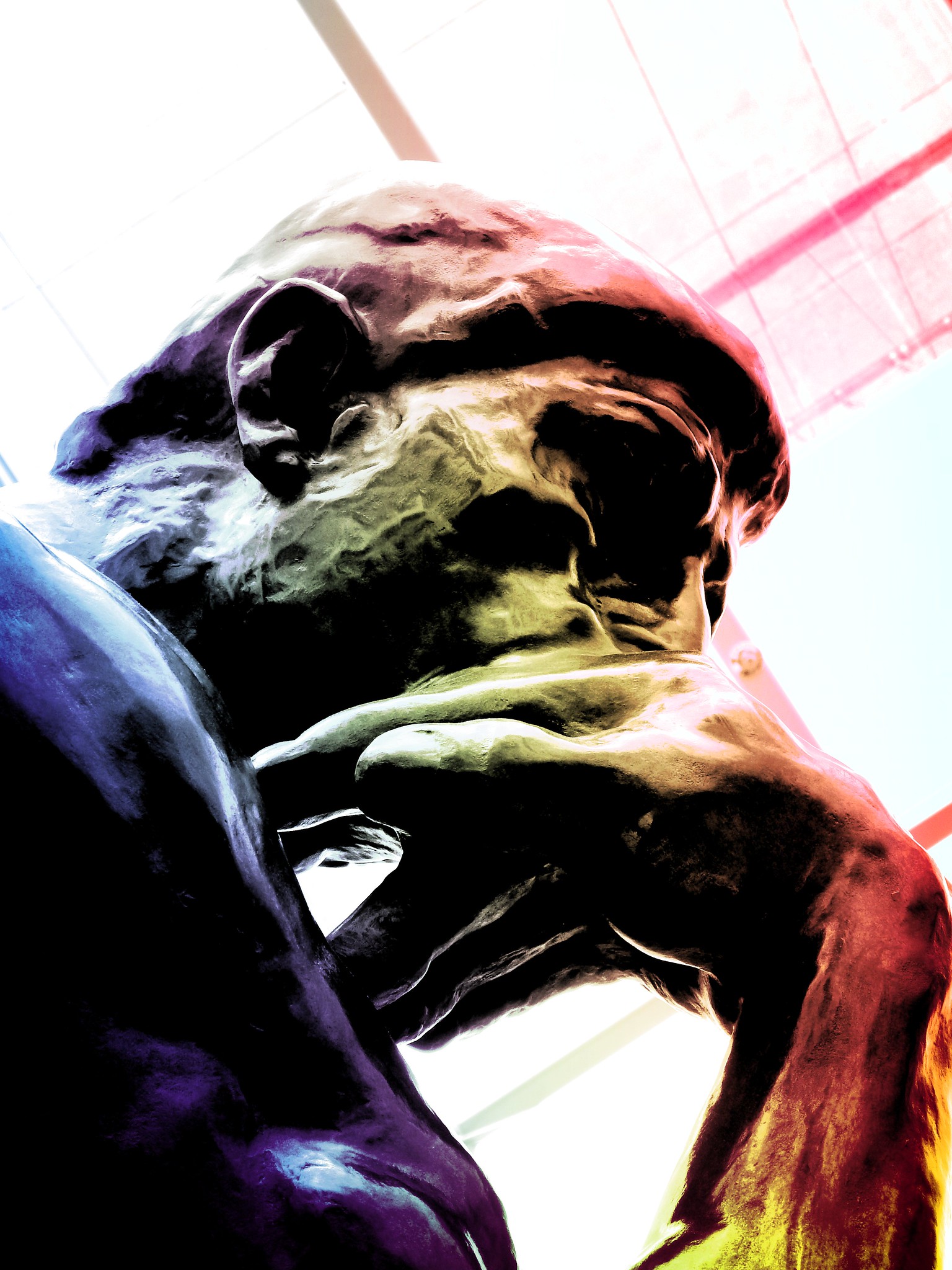
Taymaz Valley, "Rodin The Thinker"


"For this feeling of wonder shows that you are a philosopher, since wonder is the only beginning of philosophy." 

-Socrates, in Theaetetus, trans. Harold N. Flowler 

"Adulatory" seems hardly the word to describe Socrates, the ancient Greek philosopher who systematically annihilated his students' assumptions about the world in order to enlighten them. His unusually complimentary remark to his pupil Theaetus, if uttered as Plato transcribes it, must have thrilled the student, but it also must have perplexed him. At this moment in the dialogue, Theaetus, dazzled by Socrates' most recent battery of questions, has just confessed to a profound intellectual bewilderment, a delirium of not knowing...and for this, his mentor has called him a philosopher. To Socrates, Theaetus' wonder--his admission of ignorance, his hyperawareness of the resulting anxiety and excitement that "really makes [his] head swim"--in fact ensures his wisdom: a wise and wonderful paradox.

When I first started teaching, no one would have called me a "natural," least of all me. I made just about every rookie mistake, and then I coined a few more. In the past five years, I have taken solace in the notion that knowledge--in this case my professional knowledge--is both seeded and nourished by the thrill and anxiety of not knowing. I approach my teaching with more than ample wonder, and if I have garnered less wisdom than my five years warrant, I still have evidence that bewilderment gives way to understanding. The mathematician Andrew Wiles expresses this idea well with a metaphor about the challenges of his field. He compares learning to a "journey through a dark, unexplored mansion":

You enter the first room of the mansion and it's completely dark. You stumble around bumping into the furniture, but gradually you learn where each piece of furniture is. Finally after six months or so, you find the light switch, you turn it on, and suddenly it's all illuminated. You can see exactly where you were.
Then you move into the next room and spend another six months in the dark.
 (Interview on PBS' Nova, 1997)
I hesitate to call my first year of work in a large Maryland district "teaching." However avidly I created materials for the curriculum or fervently taught the assigned texts, these hours of planning and creation inevitably disintegrated before the real demands of my students--(Really) engage us. Discipline us. Relate to us.

I learned quickly that they expected a repertoire of behaviors for which I believed I had no 
innate faculty, in particular conveying a persona of authority, along with some extroversion. "Ms. O'Meara, get a backbone!" one student challenged. I felt a profound gulf between my experiences as a student of literature (so fondly recalled as I pursued my education degree) and this new reality of teaching it.

I have flipped a few light switches since that first year--not least of which was discovering why I am a teacher. This knowledge had remained hidden until my third 
year, after I had settled into my current school in Virginia. I developed a comfortable persona and many of the anxieties of being a new teacher relaxed their grip--will this bell ringer work? 
Am I lecturing too much? What time is the faculty meeting? Having reclaimed that energy, I directed it toward connecting with my students, toward better understanding how they learn and what they like. What I had only abstractly understood before, I finally and affirmatively experienced: however much I enjoy reading, discussing literature, and writing, it is the people in my classroom who keep me there.

The range of my students' personalities, personal histories, and strengths takes my breath away. John (name changed) is an irrepressible 15-year-old who came to the U.S. six years ago without literacy in his native language.  He now plays soccer and guitar, reads and writes in both English and his first language, and has contributed some of the class' most interesting insights (early in our study of John Steinbeck's Of Mice and Men, John remarked that Lennie, though physically mature, has the "heart of a child").  Hector, whose reticence masks an articulately wondering soul, is a lover of Einstein, Nikolai Tesla, and Beethoven. Though self-conscious about his English grammar, he composes fables that arrive at interesting truths: "intense emotions, like mortal fear, can utterly transform us." Mara--studious, soft-spoken, with a smile that is both warm and modest--misses her home country. She writes passionately about its attractions and its flaws, longing to return, but she also reflects on the promises of her new, adopted country.

Though I pursue teaching with more confidence and excitement every year, I sense that the rooms in this mansion are infinite. I plan to assign students their own blogs next year, in lieu of paper-and-pencil journals. One blog will use our school system's educational software, with only students' classmates and me as the audience. The other blog students may choose to share with others, on one or several topics that matter to them. It is in this spirit that I start "Wisdom and Wonder," to reflect on what matters to me: teaching, my most fulfilling vocation--whose premise is seeking wisdom with wonder.